
How to clean an iron soleplate
Clean a sticky or marked iron soleplate without damaging its finish. Identify the residue, check your model’s instructions and test on a spare cloth.
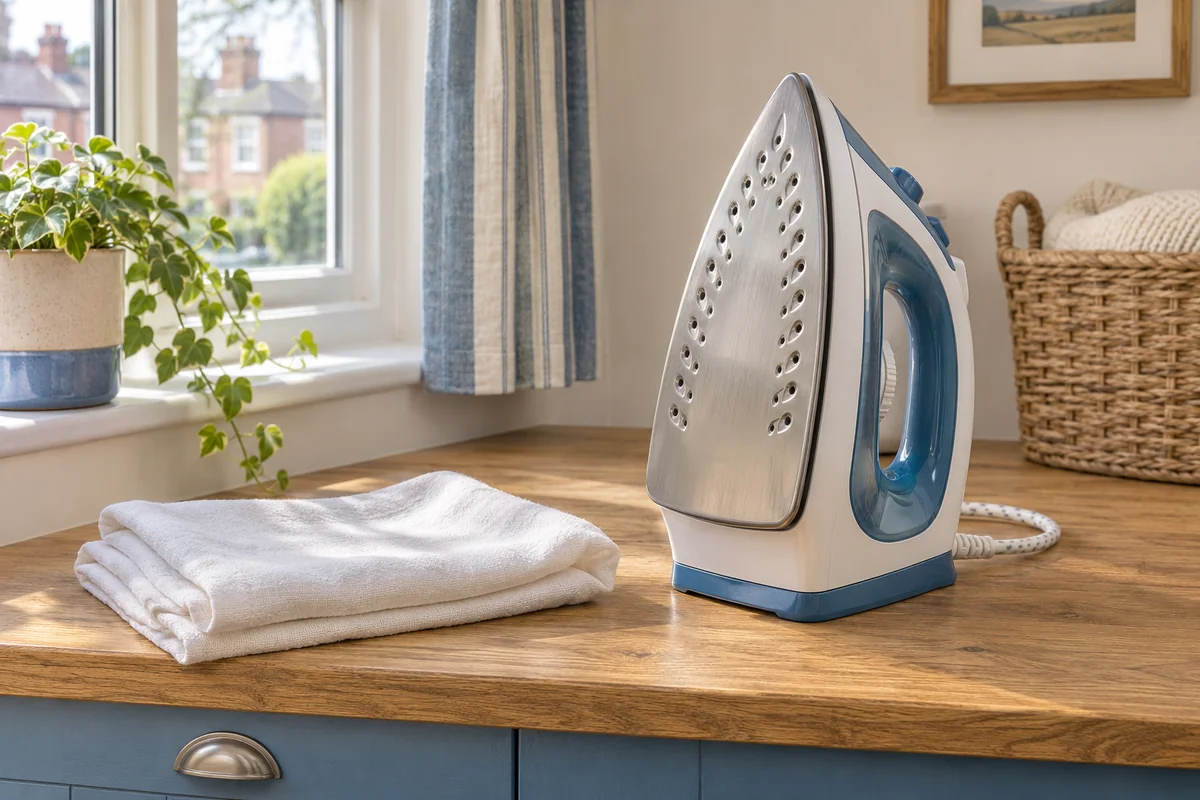
Identify the residue before cleaning
Look across the cooled soleplate in daylight. A raised smear near the tip may have come from a print, adhesive or a synthetic fibre. A dry deposit around steam holes may be mineral residue. A line that runs along the edge can indicate contact with a fastening or a worn cover. If you feel roughness, examine it without scratching the surface to see whether the finish itself has lifted.
Check the pressing cloth or board cover too. A clean soleplate can pick up material again from a stained board. If marks appear only when you use steam, use the iron spitting and marks guide to distinguish what is on the surface from what is coming through the holes.
Find the model number and the cleaning section of its manual. The name on the front of the appliance may describe several different finishes. Check the exact suffix before buying a cleaning accessory. Philips’ soleplate support guidance illustrates the soft, damp cloth approach for the models it covers, with limits on metal objects, abrasive pads and chemicals.
Clean the cooled plate with the method your model allows
- Unplug the iron. Rest it on its heel or base as directed, somewhere stable and away from wet work. Give it the cooling time specified by the maker before touching the soleplate.
- Prepare a clean soft cloth. Use it dry or lightly damp as instructed. If you wet it, wring it out. Protect the appliance openings, plug and cord from drips.
- Wipe the broad surface first. Use light pressure and a clean part of the cloth. Look again at the edge and the area around the holes before applying another pass.
- Stop if a patch stays raised or catches the cloth. Check the manual for a specific remedy, or ask the maker. Avoid knives, metal scrapers, hard brushes and abrasive powders.
- Dry the plate and check it in good light. Leave the iron in its approved resting position. Follow the maker’s routine if a separate cleaning cycle is due.
A wet sponge pressed into the holes can leave moisture inside the steam path. A damp cloth is easier to control when the instructions permit moisture. Do not rinse the whole iron under the tap. Clean only the parts the maker names and keep internal maintenance separate.
Compare two finishes before reaching for a cleaner
The Tefal Ultimate Turbo Pro FV5696G0 has a Durilium Airglide Autoclean soleplate. Its TurboPro manual tells you to unplug the appliance, wait until it has cooled and wipe with a soft cloth. The manual excludes chemical and abrasive products on the soleplate. The collector and steam chamber have their own routines. Tefal FV5696G0 model instructions.
This exact model was unavailable when reviewed in November 2026.
Tefal Ultimate Turbo Pro Anti-Scale FV5696G0
A 300 ml tank and removable scale collector suit regular ironing. The dial selects the fabric setting and the iron adjusts steam to match.
Good for
Regular pressing when you want an accessible collector and a separate dry ironing setting.
Bear in mind
Unplug, empty and cool the iron before removing the collector. Follow the model’s water and cleaning instructions.
- 300 ml tank
- 50 g/min continuous steam
- Removable collector
- 2 m cord
The Russell Hobbs Powersteam Ultra 20630 has a ceramic soleplate. Its manual permits a little vinegar for spots on the cooled plate, while warning against scratching it. The same manual excludes descaling solution inside the iron because of its anti-scale agent. That distinction matters if you have read a tip about pouring vinegar into the tank. The approval for spot treatment applies to the outside of this model. Russell Hobbs 20630 instructions.
Russell Hobbs Powersteam Ultra 20630
A 350 ml tank, ceramic soleplate and adjustable temperature and steam controls suit a mixed weekly basket. Russell Hobbs lists a 210 g steam burst.
Good for
Regular batches when you want a conventional iron with a larger tank and accessible controls.
Bear in mind
The tank is part of the handpiece, so filling it adds weight. Steam needs an appropriate temperature setting and the self-clean routine still needs doing.
- 350 ml
- 3100 W
- Up to 70 g/min stated continuous
- 210 g stated burst
If a cleaner’s packaging says it suits irons generally, look for the appliance maker’s compatibility guidance. A stick made for one finish can be unsuitable for a self-cleaning coating. Check instructions before adding a solvent, paste or abrasive to a cleaning kit.
What to do with sticky or burnt-on marks
A dark patch can come from dye, starch, a garment print or a surface that was too hot for the item. Look for a matching mark on the garment before bringing the iron back to the board. Read its label and instructions for decorative details. Our clothes care symbols guide explains the heat and steam limits to check.
For a smear, try the approved cloth method once the iron is cool. Use a fresh area of cloth as the deposit lifts. If a melted layer or rough patch remains, ask the maker how to treat it. Do not scrape away a hard deposit and assume the coating underneath is intact. Where the surface is chipped or rough after cleaning, seek repair or replacement advice before ironing another garment.
Move zips, clasps and other hard details away from the pressing area. When you have to work around one, turn or reposition the garment so the soleplate stays clear. Use the resting position the appliance maker specifies between passes. These habits keep a clean plate from picking up the same residue or catching on a fastening again.
Treat material coming through the steam holes separately
If the iron continues dropping flakes or brown water after the exterior is clean, check the filling and scale guidance. An iron that uses a self-clean button may discharge hot water through the plate. A generator may use a dedicated container or a drain on the base. Find the procedure for the exact reference and follow the timing and cooling requirements. See what water to use and steam generator troubleshooting.
Check the board before returning to normal ironing. If the cover is discoloured, loose or worn through at the nose, a clean iron can still pick up marks. A properly fitted replacement cover gives the cloth a smooth surface under the soleplate.
Test on a spare cloth before pressing good clothes
Choose a clean plain cloth that is suitable for the setting you plan to use. With the plate dry and the iron ready, make a brief pass and check both sides in good light. Try the approved steam setting on the scrap if steam is part of your normal work. Watch for wet spots, drag or residue.
If the surface is smooth and the cloth stays clean, use the temperature permitted by the next garment. If the test produces another mark, stop and recheck where it came from. Water through the steam holes, a stain from the board and a rough soleplate have different remedies. Persistent leaks or damage warrant manufacturer or qualified repair advice.
Frequently asked questions
What is the safest first step for a dirty soleplate?
Unplug the iron, let it cool in its approved resting position and check the model manual. Some models allow a soft damp cloth on the surface. Check before adding any cleaner or using an accessory.
Can I clean an iron with vinegar?
Permission depends on the model and the part being cleaned. The Russell Hobbs 20630 manual permits a small amount for spots on the cooled soleplate. Tefal’s TurboPro manual excludes chemical cleaning products on the plate. Keep the reservoir on the separate water guidance.
Can I clean a ceramic soleplate with a cleaning stick?
Check the manufacturer’s approval for the exact model and finish. Ceramic, non-stick and self-cleaning labels do not establish compatibility with a particular stick. Use the manual’s first-line method.
How do I clean the holes in the bottom of an iron?
Wipe the surface around them by the approved method. Avoid pushing pins, knives or loose fibres into the openings. If deposits come through the holes, use the model’s steam chamber or descaling procedure.
What if melted fabric will not wipe off?
Stop using the iron on clothes and ask the maker how to treat that deposit on your exact plate. Scraping or reheating it by guesswork can damage the finish or transfer the residue again.
How can I tell whether the iron is clean enough to use?
Check the cooled plate for visible residue and dry it as directed. After reassembly and normal warm-up, try it on a clean old cloth that can take the setting. If it still snags, discolours the cloth or leaks, stop and investigate.