
How to load a heated clothes airer
Set up a heated rail airer, spread a damp load within the model limits and keep space around the clothes and controls.
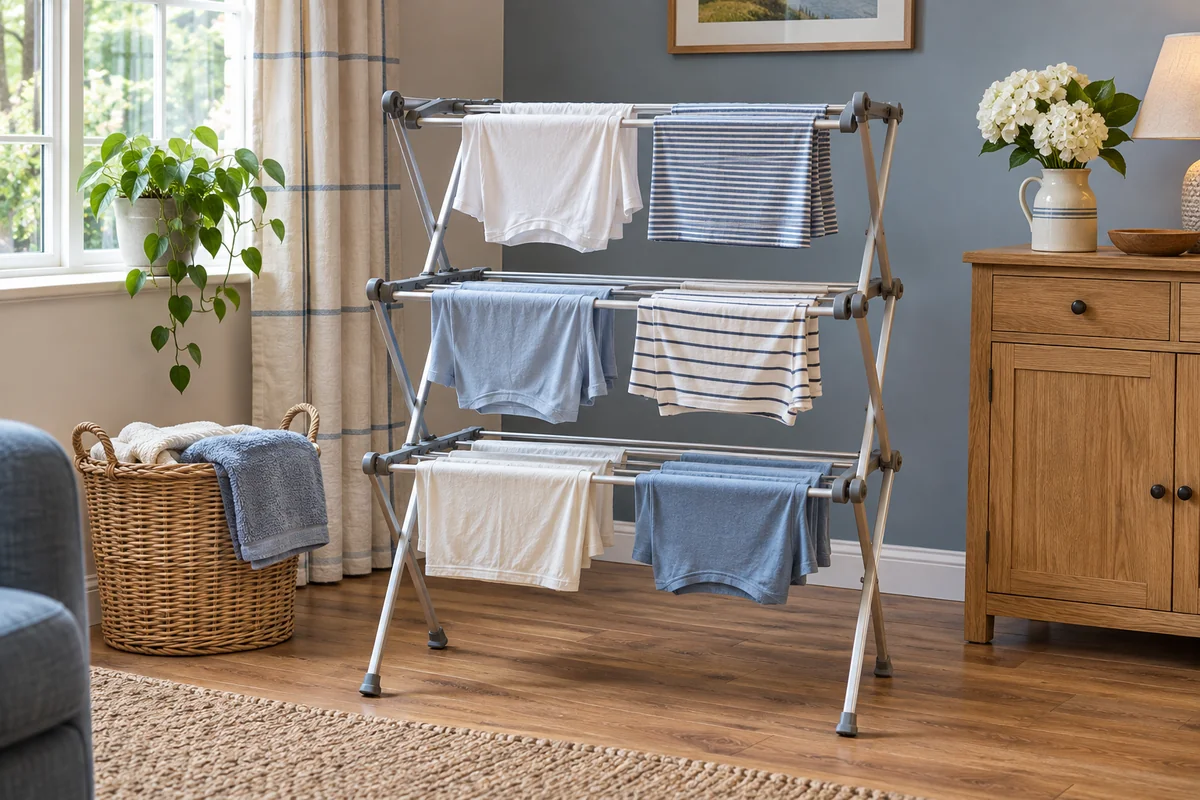
Prepare the frame and check the laundry labels
Read the airer's instructions before setting it up. Use a level, stable surface in a suitable dry indoor position and open or lock the frame as directed. Check that the cable and plug are dry and undamaged, then plan the route to the socket so the lead stays clear of the washing, the heated rails and walking routes. Give the frame the clearance the maker specifies.
Check the drying instructions on the clothes. Some garments can hang, some need support while flat, and some require shade or a method that avoids direct heat. Sort the pieces that need an unheated support before switching the airer on. The clothes care symbols guide explains how to read the label.
Plan a place for the widest and heaviest pieces
Start by making room for any item that needs a long rail or a clear drop. A bath towel may take more width and damp weight than several smaller pieces. A pair of trousers may need space where the shelf below is empty. Use the configurations the maker allows and make any changes to the frame as the instructions direct.
On a winged model, share the load across the centre and wings. Beldray states a 15 kg capacity for the EH1156 and recommends distributing the washing evenly. Avoid putting all the heaviest pieces at one end simply because the rails fit them. Leave room around thick folds for later checks.
Beldray Winged Electric Heated Airer EH1156
Eighteen heated bars sit across the main deck and wings. The airer is rated at 230 W and the frame collapses for storage.
Good for
A smaller regular load when there is room for a 148 cm-long winged rack.
Bear in mind
It has one heat setting and a 1.4 m cable. Check the socket position before choosing the drying spot.
- 230 W
- 12 m rails
- 15 kg maximum load
On a tiered rack, keep to the limit for each part of the frame as well as the total. The licensed supplier specifies 5 kg per tier for the BLACK+DECKER 63099. A 6 kg group of damp towels would exceed one tier's limit even with the other tiers empty. If you are unsure how heavy the wet washing is, weigh the groups separately on a suitable scale and split the load before you hang it.
BLACK+DECKER 3 Tier Heated Airer 63099
Three tiers provide 21 m of drying rails. The frame folds flat, while the on/off indicator makes it clear when the heating is operating.
Good for
More small and medium items when vertical rail space is useful and the full frame can remain accessible.
Bear in mind
The supplier lists H144 × W72 × D67 cm, while some retailers give H140 × W73 × D68 cm. Allow clearance for both sets of figures, keep within 5 kg per tier and check the exact cover bundle.
- 300 W
- 21 m rails
- 5 kg per tier
Spread the fabric and keep room between pieces
Give each piece a rail that supports it without bunching. Where clothes drape over a bar, check whether the two sides sit against another piece. Move an item or leave a neighbouring rail empty when you cannot make a useful gap. Thick cuffs, waistbands and folded towel borders benefit from being easy to reach later.
A 21 m rack can hold many short items on paper, while a long garment may occupy space across more than one level. Leave lower rails empty wherever a garment needs the drop. Fill smaller spaces with socks or other light pieces only if they stay clear of the longer fabric. The airer capacity guide explains the difference between line length and damp load.
Before switching on, look at the loaded rack from the side. Check the garments do not press into the frame beneath or hang over controls, the plug or cable. Keep required openings and areas clear. If you are using a fitted cover, the model's instructions should permit it in that exact configuration. See the heated airer cover guide for how to match the accessory.
Check a mixed wash before adding the last few items
Put the longer pieces in the positions that have an unobstructed drop. Spread shirts and tops so sleeves do not sit across the item underneath. Socks or underwear can use the shorter spaces that remain. Check the weight and fit again if the last few items would close the gaps you have made. If there is no suitable position left, leave those pieces for a separate rack or session.
Use the controls only as the appliance instructions allow. A timer can stop a session at a set point, while the drying of each garment depends on the load and room. Check the actual clothes at the next permitted check, and follow the same supervision guidance whether or not your model has a timer.
Run the airer and check the slow parts of the load
Follow the manual for switching on, operating time and supervision. Keep required home ventilation working while the wash dries. A heated rail warms fabric, and water released by the load enters the air. More heat does not collect moisture. If you regularly see condensation, check indoor drying with less condensation.
As drying progresses, check the thick parts as directed. A shirt front can feel dry when its cuffs are still damp. A towel can feel dry on the outside while the fold over the bar is damp. If the instructions permit moving the pieces, remove dry ones and reposition the damp parts to expose them. Avoid handling hot parts of the airer.
When everything is dry, switch off, unplug and let the unit cool as directed before folding or storing it. Check the manual before changing shelf positions or moving the appliance. If your load usually takes two sessions because of the rail shape, compare a different layout in the heated clothes airer guide.
Separate bulky items when the load is hard to reach
If a towel blocks access to two shelves, you may get a more usable setup by drying it with other towels instead of mixing it with light clothing. The same applies when a sheet would hang around the whole rack. Check its label, the frame limits and how it fits before choosing that setup. See the towel and bedding guides for handling the thick and folded areas of those loads.
Sources and specifications
Frequently asked questions
Should I put clothes directly on the heated bars?
Follow the airer and garment instructions. Heated rail models can be designed for direct contact with suitable laundry. Delicate items may need another support or an unheated method.
Can I fill all the rails at once?
Only load within the airer’s limits and leave space around the clothes. Leave some rails empty or split the load if garments bunch together or block required clearances.
How do I load towels on a heated airer?
Use the rails and layout permitted by the maker. Spread damp weight across the supports, leave access to thick folds and keep fabric clear of controls and any required openings.
Can I fold away a shelf while the airer is running?
Check the exact instructions. Set the frame in the permitted position before use. Let it cool and follow the maker’s directions before moving shelves or folding it.
Is the total load the same as the limit for each shelf?
The total applies across the whole frame. If the maker gives an individual tier or wing limit, keep within that as well.
When is the load ready to come off?
Check seams, cuffs, waistbands and folds. Remove fully dry items as the instructions allow and give any damp parts more room. Switch off and cool the airer as directed before putting it away.