
Clothes care symbols explained
Read the washing, drying, ironing and professional-care instructions on a clothes label, then choose a method that suits the finished garment.
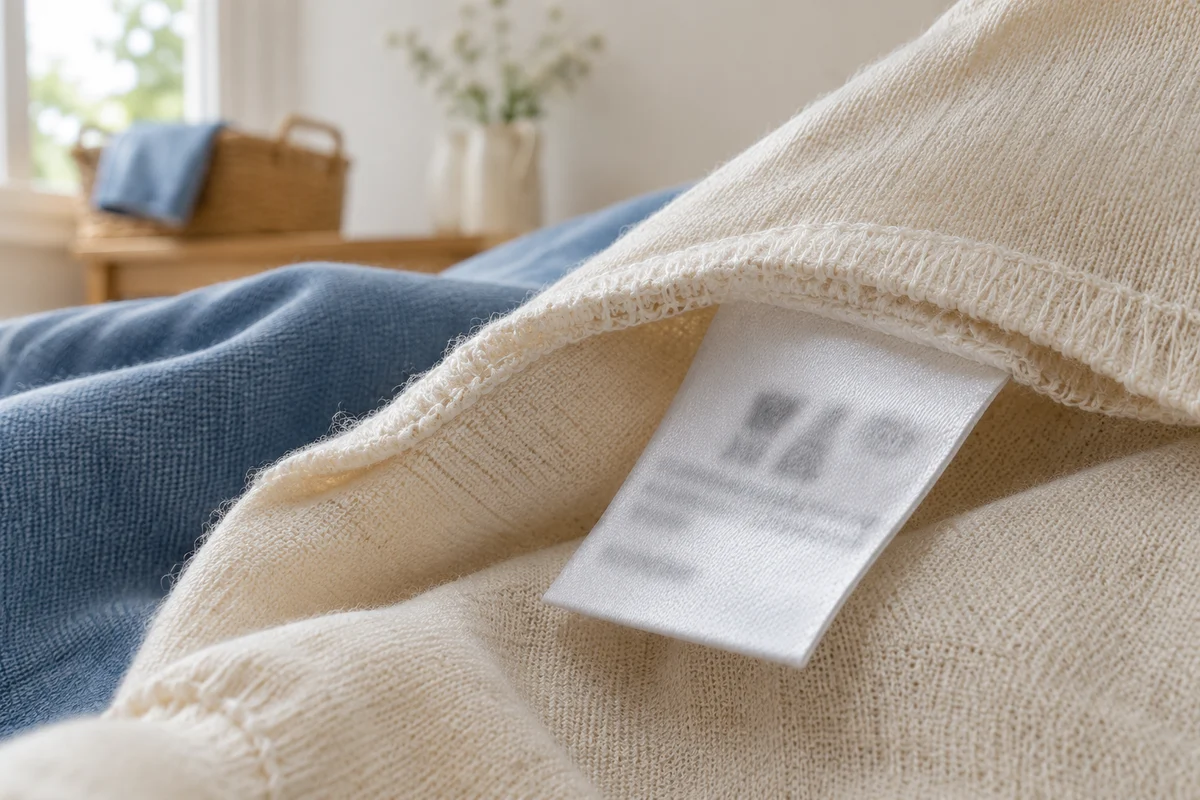
Find the instruction for the job in front of you
A care label describes the finished item, including its fibres, dyes, lining and decoration. That makes it more useful than a general rule such as “cotton can take heat”. Look inside a side seam, neckline or waistband and read the written notes alongside the symbols. A restriction on a print, trim or lining can change how you handle the whole garment.
The international care-labelling system describes the most severe treatment the item can tolerate without irreversible damage. A permitted maximum is a limit to work within. Choose the actual programme for the load you are washing, while respecting every restriction on the label. ISO describes that purpose in its care-labelling standard overview.
Before loading the machine, separate three decisions. Can the item be washed at home? How gently must it be treated? Where will it dry afterwards? Finding an answer to the last question first avoids lifting a heavy wet jumper from the drum with nowhere suitable to support it.
The five groups at a glance
On a phone, scroll sideways to read the whole table.
| Shape to look for | The job | What to check |
|---|---|---|
| Wash tub | Washing | Temperature, bars, hand-washing instruction or a cross |
| Triangle | Bleaching | Whether bleach is allowed and which type |
| Square | Drying | Tumble-dryer circle or natural-drying lines |
| Iron | Pressing | Dot count, steam restriction or a cross |
| Circle | Professional care | Letters and process restrictions for the cleaner |
The groups normally run in that order, so you can work across the label rather than decoding isolated marks. A cross through a treatment means that treatment is prohibited. The GINETEX care-labelling brochure sets out the sequence and variations.
Washing numbers and bars
Read the number in the tub as the maximum wash temperature in degrees Celsius. A bar underneath asks for a milder mechanical process, while two bars call for a very mild process. Turning down the temperature on a vigorous cotton cycle does not necessarily deliver the gentleness requested by the bars.
Match the label to your machine’s programme descriptions. Check load limits, spin behaviour and detergent guidance in the machine manual, especially when selecting wool or delicate programmes. Leave room for the permitted movement rather than compressing several delicate items into a tightly packed bag.
A hand in the tub asks for hand washing. Current guidance includes an ambient-temperature hand-wash instruction as well as a maximum-40°C version, so read any number or written note carefully. GINETEX describes both in its current symbol guide.
For wool, the sewn-in label remains the starting point even where the machine has a wool programme. Woolmark explains why some garments permit machine washing while others require hand washing or professional care in its wool washing guide.
Bleaching is a separate permission
The triangle deals with bleach. An empty triangle permits chlorine and oxygen bleach, while two diagonal lines restrict the choice to oxygen bleach. A crossed triangle prohibits bleach. Check the detergent or treatment product as well as the garment, particularly if you are adding a stain remover to an otherwise familiar wash.
Keep this decision separate from temperature. Permission for a warm wash does not establish permission for bleach. If a mark remains after the allowed wash, pause before adding another treatment. The consumer-facing Clevercare symbol index explains the bleach variations alongside the other care groups.
Tumble drying, line drying and flat drying
A circle inside the square refers to tumble drying. The dots indicate the permitted heat level and a crossed version rules out that process. A square containing straight lines describes natural drying. Look at whether those lines are vertical or horizontal, and check for a shade instruction as well.
Plan a clear position for the item while it dries. Long garments need enough hanging drop; items that need flat drying need support across their shape. An indoor clothes airer may fit the room beautifully while offering little uninterrupted flat space for a jumper.
Woolmark recommends flat drying washed wool knitwear unless the garment’s care claim allows tumble drying. Shape it carefully and avoid supporting a wet jumper from a small section of fabric. Its wool drying guidance explains why support matters. Follow our flat drying steps for a wool jumper for the setup.
For a mixed load, separate items by drying needs before hanging them. Put long pieces where their hems will stay clear and keep a suitable surface ready for anything that must lie flat. If you are considering warm rails, the heated-airer guide explains the extra decisions around space, covers and electrical use.
Ironing dots and the steam instruction
Dots on the iron shape indicate permitted soleplate temperature. Current ISO 3758:2023 guidance uses maximum temperatures of 120°C for one dot, 160°C for two and 210°C for three. Older charts commonly use 110°C, 150°C and 200°C. GINETEX documents that change in its updated temperature comparison.
Read any steam restriction separately. A low temperature instruction does not give general permission to steam, and the current system includes a low-temperature symbol specifically prohibiting steam. Keep within the garment instructions when choosing a steam iron or handheld steamer. A steamer still applies heat and moisture.
Give awkward details their own check. Fold back an embellished cuff, examine a bonded decoration and look at the lining before bringing a hot surface close. Put the garment aside if the label or maker leaves the treatment uncertain. Clevercare’s ironing advice also places the garment label ahead of a fibre-name setting.
Professional cleaning and missing labels
Letters inside the circle are information for a professional cleaner. Keep the label intact and point out any concerns such as a stain, loose decoration or previous damage when you take the garment in. Professional wet cleaning uses controlled equipment and finishing methods; the wording does not describe a household washing programme.
If a label says “Dry Clean Only”, take that instruction seriously. Woolmark discusses that distinction for wool garments in its professional cleaning guidance. A missing label is a reason to find the maker’s advice or discuss the item with an appropriate cleaner. Guessing from touch or appearance leaves the lining and finish unaccounted for.
Photograph a legible label and the garment reference while you still have them. That gives you a useful record if the print fades. Clevercare recommends keeping labels available to help the cleaner select a process in its professional care tips.
For more detailed examples, use the drying symbols guide and ironing symbols guide.
Where a wash bag helps
A mesh bag can keep small machine-washable items together and separate a covered fastener from neighbouring garments. It adds a useful layer of organisation once you have checked the wash permission. Choose a bag with room for the item to move and rinse, then secure the closure as its maker directs.
The following set offers two sizes for suitable small garments. Check your item against the bag dimensions and use the garment’s permitted programme. Our mesh wash bag comparison explains closure, size and shape differences.
Brabantia Wash Bags Set of 3 149221
Two smaller bags and one larger bag let you separate a few items without filling one net tightly. Each zip has a cover for the pull-tab.
Good for
Small garments or delicate pieces that fit loosely inside one of the two supplied sizes.
Bear in mind
These are flexible bags, so structured garments still need enough room to retain their shape. Follow the garment label and bag instructions together.
- Three bags
- Two sizes
- Covered zip pulls
For the rest of the load, keep the equipment decision tied to the label. Choose a place to dry the garment, decide whether it needs pressing, and only then select the relevant tool. The fabric-care hub brings those choices together.
When the label permits ironing and the finish is prone to shine, see how to use a pressing cloth for the right cloth, heat and moisture.
Frequently asked questions
Does a 40°C label mean I must always wash at 40°C?
The number states the maximum permitted temperature for that washing process. A cooler programme can be suitable, but it must also respect the required gentleness and the garment maker’s written instructions. Check detergent suitability and the wash you actually need.
Can I machine wash a hand-wash garment in a mesh bag?
A bag does not turn a hand-wash instruction into permission for a machine programme. Use the method the garment maker allows. For items that are machine washable, a suitable bag can help keep small pieces together and separate fasteners.
Does do not tumble dry mean the garment must dry flat?
Look for a separate natural-drying instruction. Do not tumble dry rules out the tumble dryer, while a horizontal line in the natural-drying square indicates flat drying. Read the garment’s wording or ask its maker if the drying position is unclear.
Why do ironing charts show different temperatures for the same dots?
The current ISO 3758:2023 guidance uses maxima of 120°C, 160°C and 210°C. Older charts commonly show 110°C, 150°C and 200°C. Check the garment’s wording and appliance instructions, and avoid increasing heat on an older or uncertain garment just because a newer chart permits it.
What do letters inside a circle tell me?
They give a professional textile cleaner information about the permitted process. Take the garment and its intact label to the cleaner, particularly for tailored, lined or embellished items. They are not washing-machine programme letters.
What should I do if the label has been cut out?
Look up the exact garment with its maker, using the item name or product reference where available. Keep photographs of labels before removing them. For a valuable, structured or uncertain item, get appropriate professional advice before trying water, steam or heat.