
How to dry hand-washed delicates
Remove water gently, support the wet garment and choose the drying method on its label. Includes flat drying, hanging and checking thick areas.
Read the drying instruction before removing the water
A hand-wash instruction tells you how to wash the item. The drying instruction tells you what support it needs afterwards. Check both while the garment is still easy to handle. Some pieces need to lie flat, some may hang, and some need to drip dry with more of the rinse water left in them.
Look for the natural drying symbol or written directions. A horizontal line inside a square indicates flat drying, while vertical lines indicate line drying. The doubled versions identify drip drying, and the diagonal mark adds shade. Follow the combination on the garment. The drying symbols guide explains how to read the full instruction. GINETEX natural drying symbols.
If the label has worn away, check the maker’s product information using the garment reference before choosing a method. Fabric name alone leaves out linings, trims, dyes and construction. Find out how the whole garment should dry, especially where an embellishment or shaped lining holds a lot of water.
Support the item as you lift it from the basin
Support the weight of the wet garment with both hands instead of lifting it by one strap, shoulder or narrow hem. Let excess water drain back into the basin in the way the label permits. Keep a clean surface nearby so you can move the garment without carrying it across the room dripping.
Follow the maker’s water-removal directions. For silk that permits hand washing, LILYSILK advises gentle handling and avoiding twisting or wringing. Its care guidance uses a towel to absorb excess water before air drying. Use a clean pale towel that will not shed lint or transfer colour to the garment. LILYSILK hand-washing and drying guidance.
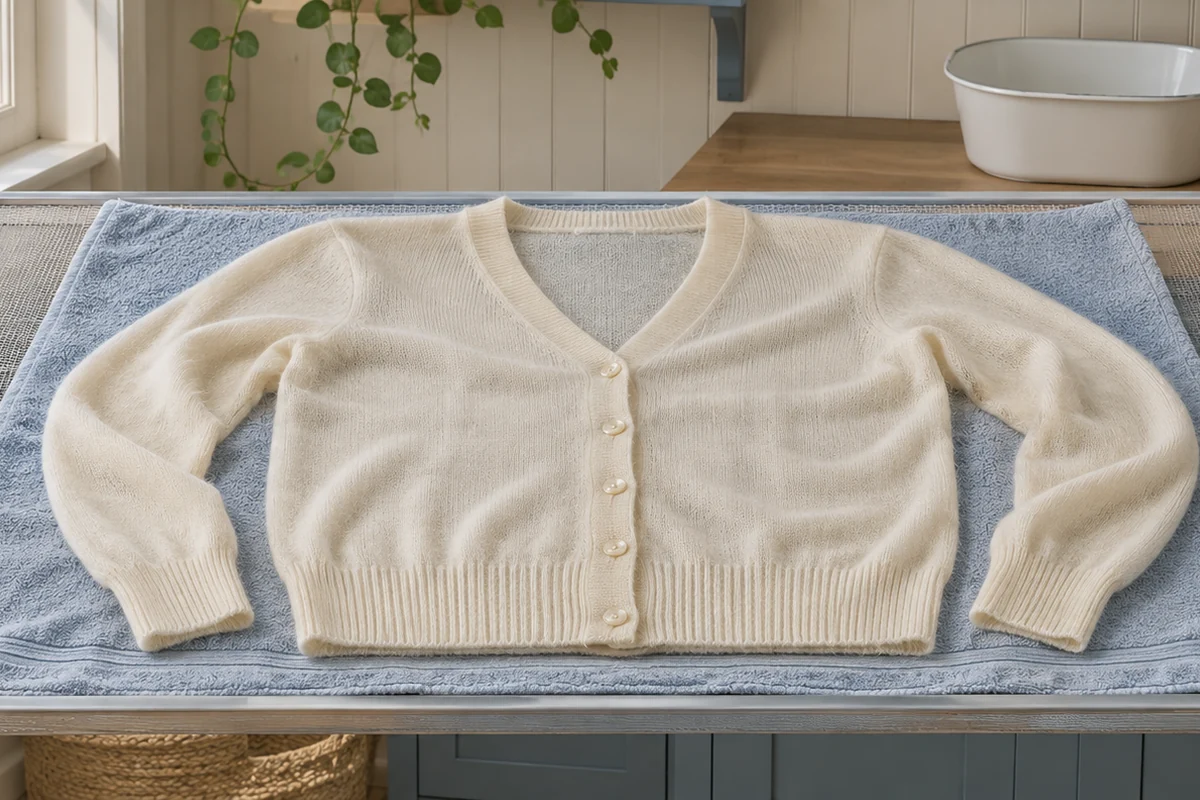
Spread a suitable item on the towel in a relaxed shape. Where the maker allows a towel roll, roll the towel around the garment gently, press to absorb water and unroll it promptly. Keep trims, cups and stiff sections in mind. Move the garment to a fresh dry towel or its permitted drying support afterwards. For an item labelled drip dry, follow that instruction before using a towel to remove water.
Choose the drying support for the shape
Scroll sideways to compare drying support and the checks for each garment.
| Label or garment check | Support to consider | Check before leaving it |
|---|---|---|
| Dry flat | Clean towel or suitable full mesh support | Body, sleeves and other wet sections remain supported |
| Line dry permitted | Appropriate line, rail or hanger as the maker directs | Contact points support the weight without distorting the item |
| Drip drying | The specified flat or hanging arrangement with runoff managed | The support, surface below and location can handle dripping water |
| Dry in shade | A suitable location out of direct sunlight | Sunlight will stay off the garment as the day progresses |
Give a flat-dry item full support
Smooth a flat-dry garment into its intended shape while it is supported. Arrange the sleeves and hems so none of the wet fabric hangs over a sharp edge. Keep overlapping layers apart where the design allows it. Woolmark recommends drying wool sweaters flat on a clean pale towel and keeping them away from direct heat and sunlight. Hanging a wet knit can stretch the garment under its own weight. For the fuller knitwear method, use how to dry a wool jumper flat. Woolmark drying guidance.
A mesh support can leave air beneath a garment that fits its usable area. The OXO Folding Sweater Dryer has a supported mesh surface and legs that fold for storage. Check the body and sleeves against the actual support before laying them out, and choose a stable location where the whole frame can sit as intended.
OXO Good Grips Folding Sweater Dryer 1327780
A square mesh surface supports a suitable garment flat. Low legs lift the mesh above the work surface, and the frame folds for storage.
Good for
A jumper or other flat-dry garment whose full shape fits within the supported mesh area.
Bear in mind
Measure the garment with its sleeves arranged before choosing the rack. It needs a stable level surface beneath its feet and space for air to reach the mesh.
- Approx. 66 cm square open
- Flat mesh support
- Folds for storage
If the garment extends beyond the mesh, reposition it only if you can keep the intended shape supported. Use a larger suitable support when that is impossible. A fine top may occupy little dry storage space and still need a wide outline to dry flat. Compare the options in the flat drying rack guide.
Hang only where the garment permits it
For an item whose instructions allow hanging, support it at the points the maker specifies. Check that straps, shoulder seams or waistbands can carry the wet weight in that arrangement. Keep the garment clear of walls, the floor and other wet clothes. Give any runoff a suitable place to go without creating a slippery walking route.
For bras and lingerie, check the maker’s directions for cups and fastening before hanging or laying flat. Bravissimo advises air drying its bras and avoiding direct heat. Choose a place where the cups can retain their shape without being squeezed by nearby items. Bravissimo lingerie care guide.
Check the damp areas before storing
A thin front panel can feel dry before a cuff, waistband, lining or padded cup. Check those thicker parts gently and leave the garment to dry fully. With a towel support, replace a damp towel when the garment instructions allow you to move the item safely. Support the whole piece as you lift it and restore its shape on the new surface.
Keep normal ventilation working in the drying room. Choose a place away from direct heat, and follow any shade instruction. If windows or walls regularly collect moisture, review the indoor drying guide for room conditions. Drying time depends on the garment, how much water remains and the room, so use the item’s condition to decide when to put it away.
Manufacturer specifications
Frequently asked questions
Does a hand-wash label mean I must dry the item flat?
Read the separate drying instruction. Some hand-washed items need flat support, some permit hanging and some specify drip drying. The washing method alone does not choose the drying method.
Can I roll a delicate garment in a towel?
Use that water-removal method when the garment maker permits it. Choose a clean pale towel, handle the item gently and protect shaped parts or trims. Follow a drip-dry instruction before removing more water.
Can a mesh drying rack replace a towel?
A suitable mesh rack can support a flat-dry garment and let air beneath it. Check the usable area, frame stability and garment label. The whole wet shape needs support.
How can I tell when a delicate item is dry?
Check thicker sections such as seams, cuffs, bands, padding and linings as well as the exposed fabric. Leave it until those areas are dry before storing.
Can I dry delicates on a heated airer or radiator?
Check the garment’s restrictions on heat and support. Woolmark advises keeping wool away from radiators and direct heat, and lingerie makers can give similar restrictions. Choose the method the exact label allows.