
Why clothes pill, and how to tell bobbles from snags
Understand why jumpers and other clothes develop bobbles. Identify pilling, loose lint and snags, reduce avoidable rubbing and choose suitable garment care.
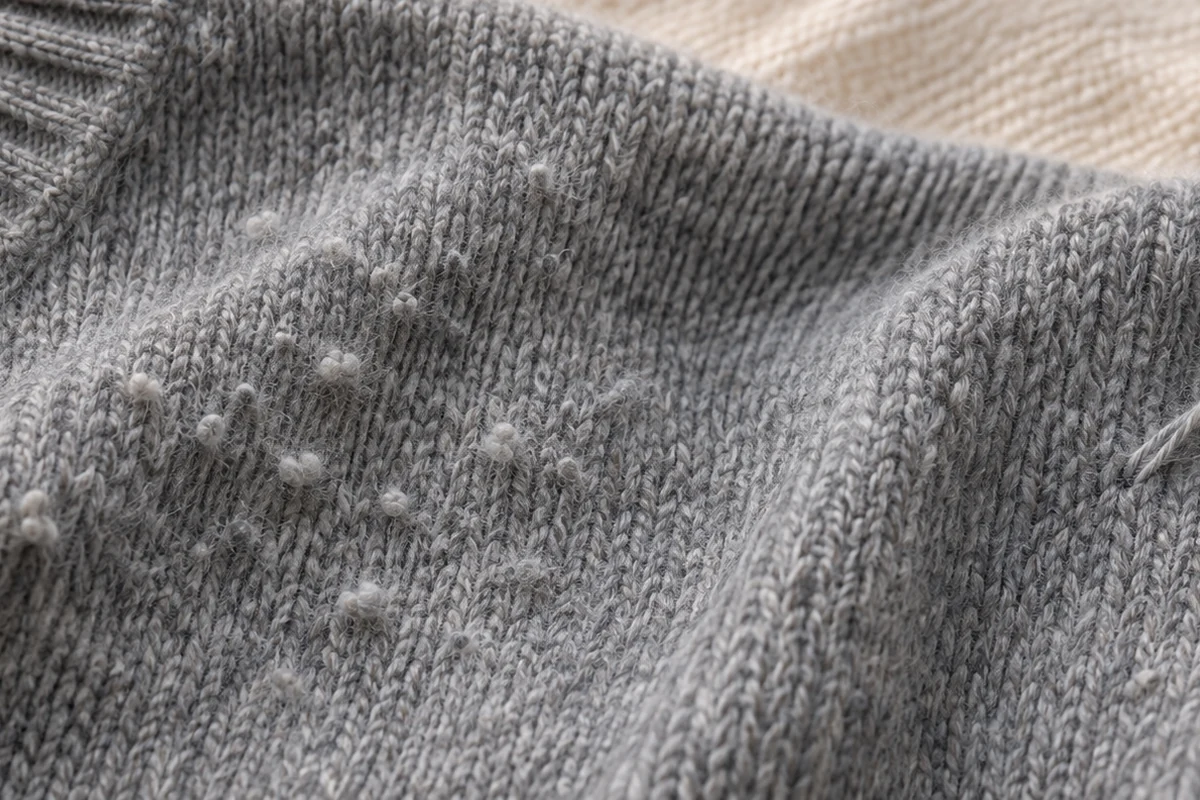
What pilling actually looks like
Pilling is the appearance of small balls of tangled fibre attached to a fabric’s surface. On a jumper, these can gather into rough-looking patches while the stitches beneath remain recognisable. Rubbing is an important cause. Woolmark highlights elbows, underarms and side panels among the common places affected on wool clothing. A garment can therefore look quite different on the front, sleeve and back after the same period of wear.
The first useful question is what has changed. Compare an affected patch with an intact section of the same garment in good daylight. A few attached bobbles, a loose covering of lint and a loop pulled from the knit lead to different care decisions. Choosing a tool before making that distinction can turn a small appearance problem into damage.
Tell pills, lint and snags apart
On a small screen, scroll sideways to compare the surface clues and next steps.
| What you see | Likely explanation | Useful next step |
|---|---|---|
| Compact balls attached by fine fibres | Pilling or bobbling | Check garment advice for a permitted de-pilling method |
| Loose hair or specks lying across the surface | Lint, hair or transferred debris | Consider an appropriate brush or cleaning method |
| An extended loop with disturbed stitches nearby | Possible snag or pulled yarn | Leave intact and assess repair |
| An even halo across affected and protected areas | Possibly the intended brushed or hairy finish | Compare with original product information before removing it |
| Thin areas, holes or separating stitches | Damage needing assessment | Keep de-pilling tools away and seek repair advice |
These are inspection clues rather than a remote diagnosis. If the raised material seems to connect to a row of stitches, leave it alone. A clear photograph of the whole garment and a close view can help the maker or repairer understand what you are seeing. There is no need to pull on a suspicious loop to prove that it is attached.
Why some patches develop more bobbles
Look for repeated contact. A shoulder strap moves against one narrow area; a sleeve brushes the body; a coat lining contacts the same cardigan panels through the day. Consider the position of the pills before changing your laundry routine. A concentrated patch may give you a more useful clue than the total number of bobbles on the jumper.
Fibre and construction also matter. Woolmark identifies fibre length, yarn twist and fabric construction among factors that can affect pilling. That complexity means a fibre label or price alone cannot predict exactly how a garment will behave. Nor can a few surface pills tell you that the knit has failed. Assess the surface, fit and underlying condition together. Woolmark guidance.
Patagonia’s garment-care guidance also describes washing and drying as potential sources of pilling through agitation. Its advice to separate abrasive fabrics from vulnerable clothing is a useful prompt to inspect a permitted laundry load. A wool jumper with a hand-wash label still needs its specified method; do not put it through a machine merely to try a different sorting arrangement. Patagonia pilling guidance.
Reduce avoidable rubbing during wear
Start with the obvious contact points rather than trying to change everything. Check whether a rough strap edge sits on the bobbled patch or whether a sleeve repeatedly catches a fastening. You might move a bag to another carrying position or choose a smoother outer layer where practical. Those are ways to reduce a visible source of friction, without promising that a worn garment will never pill again.
Inspect accessories too. A projecting zip edge or sharp item of jewellery can be relevant when you find pulled loops, rather than compact bobbles. Removing the repeated catching point protects the repair you may arrange afterwards. Do not use a comb to force a snagged area smooth while the cause remains in contact with it.
Use the care label to choose the washing method
Read the label before sorting the garment into a load. Fibre content is useful information, but two wool garments can have different wash permissions and finishes. If machine washing is allowed, use the specified programme, temperature and detergent guidance. If hand washing is required, a machine’s “hand wash” label does not automatically authorise that substitution.
Turning suitable knitwear inside out is one measure recommended by garment makers to reduce outer-surface rubbing. Jigsaw also advises avoiding unnecessary washing of its knitwear and drying flat as directed. Apply the advice relevant to your item rather than treating any one tip as permission to change its whole care routine. Jigsaw knitwear guidance.
A mesh bag can contain a garment in an otherwise permitted wash, but it cannot approve machine washing, correct an unsuitable programme or guarantee no pilling. Check bag size and closure as well as the garment label. Read washing knitwear in a mesh bag and drying a wool jumper flat for those separate decisions.
Remove existing bobbles only where appropriate
Take the garment off, ensure it is dry if the chosen tool requires that, and lay it on a supportive surface. Read both the garment maker’s advice and the tool instructions. A smooth, intact panel offers a different situation from a raised cable, loose stitch or intentionally hairy knit. Choose a less visible place to test and examine the result before treating the main patch.
A manual example is the Clothes Doctor Beechwood Cashmere Comb. The maker specifies dry garments and light combing in one direction. It is an option to consider for suitable knitwear that permits combing. The name “cashmere comb” does not override a particular garment’s restrictions. Clothes Doctor instructions.
Clothes Doctor Beechwood Cashmere Comb Beechwood Cashmere Comb
A manual knitwear de-pilling comb with an untreated beechwood handle. Clothes Doctor specifies dry garments and light strokes in one direction.
Good for
Small areas of bobbling on suitable knitwear where the garment maker permits combing.
Bear in mind
Test a hidden area and stop if the edge catches yarn or alters the finish. Keep clear of pulled loops, damaged stitches and any surface the garment maker excludes.
- Manual comb
- Beechwood handle
- Use on dry garments
A guarded fabric shaver is another possible method for suitable surfaces. Check its guard, working technique and exclusions before use, and stop if it catches or changes the finish. Our comb and shaver comparison explains the different handling demands. Whichever method you choose, work only on the area needing care and inspect between passes.
Treat a snag as a repair question
A snag can be a loop of yarn drawn out of the knit. Cutting that loop may cut material that belongs to the garment’s structure. RUBY’s knitwear guidance distinguishes snags from pills and warns that cutting a snag can create a hole. A de-bobbler’s cutting guard does not make that structural thread expendable. RUBY knitwear care.
If the garment is valuable, very fine or already has disturbed stitches, ask a repairer before attempting to pull the yarn back. Keep the item away from the object that caught it, store it without further strain and avoid working tools across the affected section. Other intact areas may still need ordinary care, but they do not make the damaged area suitable for shaving.
Judge the result against the garment’s intended finish
After permitted de-pilling, inspect the surface beside an untreated, intact section. You are looking for an improvement in attached bobbles while preserving the original texture. Soft knitwear can retain a gentle halo. Continuing until every projecting fibre has disappeared is a different goal and may change the finish you bought.
If a new garment changes unusually quickly, or pilling appears alongside thinning and broken stitches, record its condition before further treatment and contact the maker. Surface bobbling alone is an incomplete guide to quality; the pattern and condition deserve a specific assessment. Keep the care label and purchase information available so the advice can address the actual item.
Sources
Woolmark: what is pilling? · Patagonia: pilling and garment care · Jigsaw: knitwear and cashmere care · RUBY: knitwear care and snags · Clothes Doctor comb instructions.
Frequently asked questions
Does pilling mean my jumper is poor quality?
Pilling alone cannot establish a garment’s quality. Fibre characteristics, yarn and fabric construction, wear and rubbing all matter. If a new item pills unusually quickly or has thinning or broken stitches, photograph it and ask the maker to assess that specific garment.
Why does my jumper pill under the arms and at the sides?
Those are areas where sleeves and the body of the jumper repeatedly contact one another during wear. Look also for contact with a bag strap, outer layer or desk edge when deciding what rubbing you can reduce.
Is the long loop on my jumper a pill?
A long loop may be a snag: yarn pulled out from the knit. Leave it intact and check the surrounding stitches. Cutting it with a shaver or scissors can create a hole, so ask the maker or a knitwear repairer if you are unsure.
Will washing inside out stop all bobbling?
It can reduce exposure of the outer surface during permitted washing, but it cannot prevent all pilling from wear. Continue to follow the exact wash and dry instructions; turning a garment inside out does not make it machine washable.
Does removing pills stop them coming back?
Removing existing pills changes the current surface. More can form if friction continues. Use only a permitted method, inspect the fabric as you work and avoid repeatedly treating unaffected areas in pursuit of a completely hairless finish.