
How to dry hoodies on an airer
Give a damp hoodie support, open the hood and sleeves and check the cuffs, pocket and lining before you wear it or put it away.
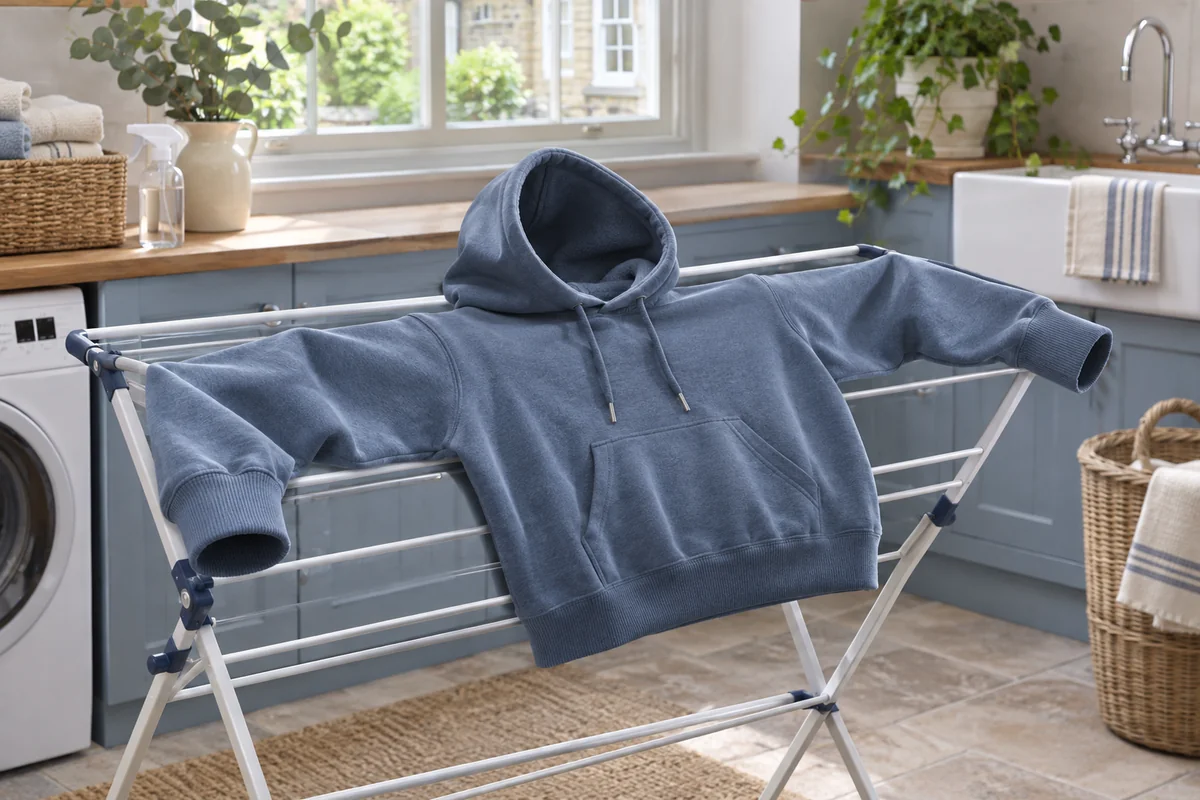
1. Check what needs support
Look for the natural drying instruction on the care label before choosing a rack. Nike's hoodie care guide offers flat or hanging air drying in a cool, dry space away from direct sun. The best choice for a particular hoodie still depends on its label and construction. A lightweight sports top and a thick cotton sweatshirt with a lined hood put different loads on their shoulder seams when wet.
Lift the garment with both hands. Smooth the body into its usual shape with your palms and check that the side seams are straight. Feel whether the hood is substantially heavier than the sleeves or body. If it pulls the neck out of shape when you hold the garment up, give it a separate area of support. A hanger with a narrow shoulder can create two points where the wet fabric stretches. Flat drying spreads the weight when the label allows or requires it.
Empty the pocket and check the hood opening, ribbed cuffs and hem. After washing, make sure the drawcord ends are accessible and clear of rack joints. Check any decorated surfaces before turning the hoodie inside out. For a printed front, avoid rubbing the damp print across a rail or putting a peg on it.
2. Open the hood and sleeves on a flat rack
Spread the body across a clean, stable mesh support and place the hood beside it, within the usable mesh. Open the face of the hood so its lining is accessible and straighten the join at the neckline without stretching it. Lay each sleeve out beside the body. If you need to bend a sleeve to fit, place the cuff away from the pocket and leave the folds loose. The shoulders, hem and sleeves should all be supported.
The OXO Folding Sweater Dryer opens to roughly 66 cm square. Measure the hoodie with the hood arranged to the side before deciding whether it fits. This rack may work for a smaller garment, while a larger adult hoodie may need a broader drying surface. Check the support under the mesh and follow the setup instructions for the rack.
OXO Good Grips Folding Sweater Dryer 1327780
A square mesh surface supports a suitable garment flat. Low legs lift the mesh above the work surface, and the frame folds for storage.
Good for
A jumper or other flat-dry garment whose full shape fits within the supported mesh area.
Bear in mind
Measure the garment with its sleeves arranged before choosing the rack. It needs a stable level surface beneath its feet and space for air to reach the mesh.
- Approx. 66 cm square open
- Flat mesh support
- Folds for storage
If your hoodie fills the whole mesh, leave the rest of the load on another part of the airer. Avoid laying socks or shirts in the gaps around the cuffs and hood. When the upper surface begins to feel dry, lift the whole garment with support and lay it back down with the damp side facing out. Check the new position for fabric still pressed against itself. See flat drying racks for wool and delicates to compare usable mesh areas.
3. Use separate rails if the label allows draping
Choose a rail position with enough space on both sides for the body to hang without pressing into neighbouring clothes. Drape the body so its weight is supported across a broad section. Give the hood a nearby rail or shelf of its own. Keep a little slack at the neckline so the hood stays supported without pulling the body sideways. Leave enough drop for the sleeves and cuffs to clear other tiers and the floor.
The Leifheit Pegasus 180 Solid Classic 81514 has a central deck and raised wings. On a garment that permits draping, reserve a broad section for the body and a nearby rail for the hood, keeping slack at the neckline. Check the 157 × 66 cm open frame fits the room and that the hanging sleeves clear the floor. Choose the flat method instead if the rail arrangement pulls the body or leaves a lasting ridge.
Leifheit Pegasus 180 Solid Classic 81514
An 18 m winged rack with 105 cm-high wings and two small-item holders. The open frame measures 157 × 66 cm across the floor.
Good for
A clear run of floor where longer garments need raised rails and both wings can remain open.
Bear in mind
Wider than the 55 cm Pegasus 150. Allow 66 cm frame width plus laundry overhang and access. The maker describes flat storage but does not give a folded measurement or wet-load rating on this page.
- 18 m drying line
- 105 cm-high wings
- Two small-item holders
Look at a zip-up from the side after hanging it. If closing the zip holds two damp surfaces together and the instructions permit drying it open, separate the panels and give the inside air. On a pullover, check that the front and back are loose enough to separate where the shape allows. A kangaroo pocket can have a damp lower edge even when the chest is ready. Leave that edge exposed and keep it off neighbouring garments.
4. Check the places that dry last
At the next check, feel the inner hood and the seam where it joins the body. Open the rim and turn the damp face outward without forcing the seam. If the sleeves were folded, slide them to a more open position and unroll cuffs that are designed to lie flat. Check the wrist edge and ribbing separately. Move the body slightly to expose the strip that was resting on the rail.
Before storing the hoodie, reach into the pocket and feel the seam along its lowest edge. Then check the underarms, the inner hem and any area behind a zip facing. Dry fleece on top can conceal a damp layer inside. If the lining still feels moist, leave it spread on the rack with that side exposed. Check for colour transfer before stacking it with paler clothes.
A ventilated drying space helps you manage a thick garment over a longer session. Keep required air paths clear and split a crowded load so the hood, cuffs and pocket have room. If you regularly find water on nearby windows or walls, see how to dry laundry indoors with less condensation. For a heated rack, use only the arrangement the maker permits and follow the loading guide for positions and damp weight limits.
Give bulky hoodies a place of their own
If you wash several hoodies together, work out how many whole hoods you can keep open on the rack. Put the thickest hoodie in the position with the easiest access. Lighter pieces can go on another tier if they leave enough room around its sleeves. When you can only fit a second hoodie by laying its hood over the first, dry the two separately. The airer capacity guide explains how to assess usable space with an actual wash.
Sources and guidance
Frequently asked questions
Should I hang a hoodie or dry it flat?
Check the label first. A heavy hoodie or one with a flat-dry instruction needs full support. If hanging is allowed, use a setup that supports the damp weight without pulling the shoulders out of shape.
Why is the hood still damp when the body is dry?
The hood often has two layers and can lie against the back of the sweatshirt. Give it its own space on the rack, then check the inside lining and the thick join at the neckline.
Can I dry a hoodie inside out?
If the maker permits it, turning it inside out can expose the pocket lining and inner seams. Handle prints and trims as the garment instructions direct and keep the hood spread out either way.
Can I dry a heavy hoodie on a hanger?
Only where the label permits hanging and the garment is supported without stretching. A heavy wet hoodie can pull at narrow hanger ends. Use a full flat support when the label requires it or hanging visibly distorts the shoulders.
How can I tell if a fleece hoodie has finished drying?
Check beneath the ribbed cuffs and hem, inside the pocket and inside the hood. The outer fleece can feel dry while the seam allowances or hood lining are still damp.
Can I dry a hoodie on a heated clothes airer?
Check the garment label and the appliance manual. Follow the permitted placement and load limits, and keep the hood and loose drawcords clear of controls and other areas that must stay unobstructed.