
How to steam clothes with sequins, prints or trim
Check which parts of an embellished garment can be steamed, how to protect sequins and transfers, and when to ask the maker or a specialist cleaner.
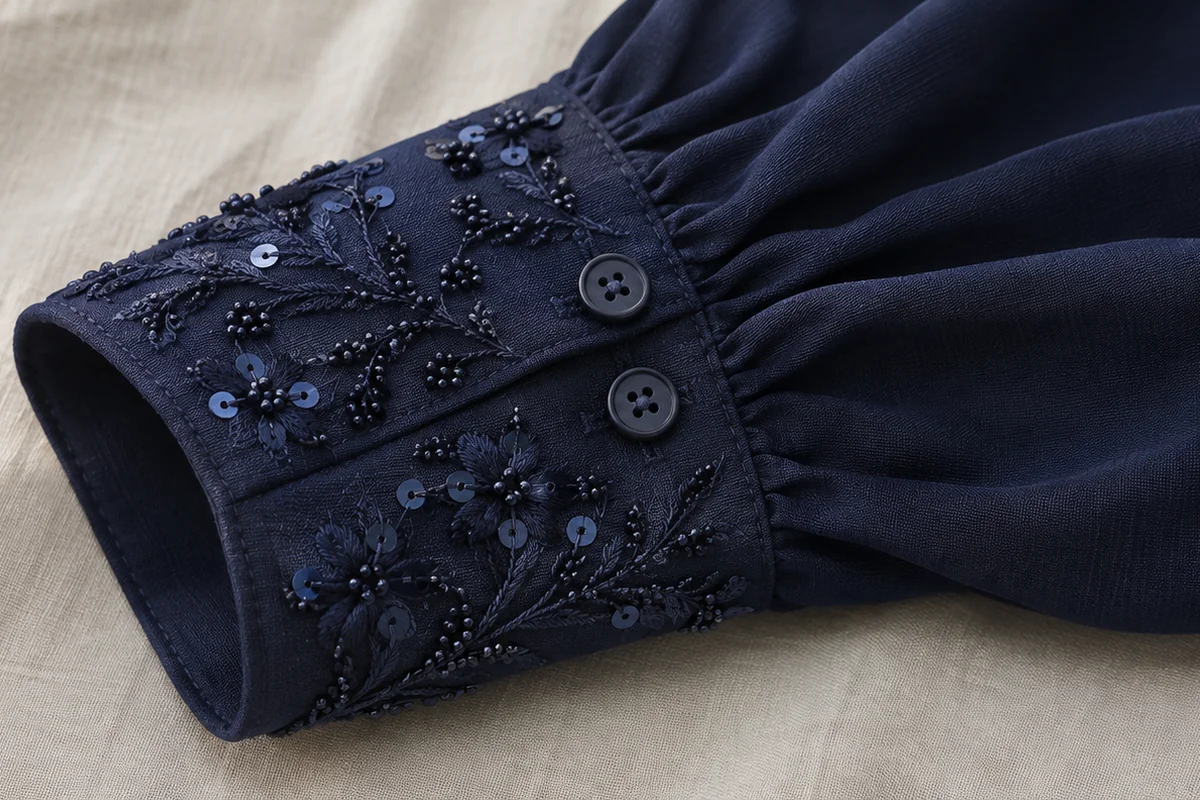
Read the care instruction for the garment and the decoration
Start by finding the crease and working out which layer it sits in. A wrinkle on a plain sleeve is a different job from a fold through a line of beads. Turn the garment under good light and check both faces. Look for a printed neck label, fastenings, motifs, lining or appliqué that would sit directly behind the area you intend to treat.
Read the label and any care notes the maker provides for that item. A generic instruction about the fibre, such as a rule for plain cotton, gives little information about an added print or adhesive. If the label gives an ironing temperature without mentioning steaming, ask the maker when the decoration or finish is heat-sensitive. An instruction to wash something inside out describes the washing step. Look for a separate instruction about pressing or steaming.
Compare how different trims are attached
Identify the decoration only as far as you need to avoid it. A stitched sequin can be heat-sensitive even when its stitches look secure. A patch may be stitched around the edges and bonded underneath. If you cannot tell how a detail is fitted, leave the area clear and look for the maker’s advice.
Scroll sideways to see the checks for each trim.
| Detail | Check before treating the crease | When to ask the maker |
|---|---|---|
| Stitched beads or sequins | Find the decorated edges and check for loose threads. | The fold passes through trim or the care instructions are unclear. |
| Transfer, vinyl or foil print | Check the decoration supplier’s instructions and locate the full graphic from both sides. | You would need to steam through the design or an edge is already lifting. |
| Embroidery or appliqué | Look at the threads, backing and attachment. Keep raised details clear of the head. | The backing, embellishment or nearby fabric has a different care limit. |
| Metal fastenings and stones | Check the finish and how each piece is fixed. Move the hardware out of the working area where possible. | You cannot isolate the crease or the decoration needs separate care. |
Whistles publishes separate care advice for sequin and beaded garments, while Stahls advises avoiding direct iron contact with its heat transfers. Apply the instructions for the garment and the exact decoration you have. A method published for one brand, finish or transfer can leave a different item damaged.
Work on an allowed plain area first
- Support the garment in its normal shape. Use a stable hanger or the support approved by the garment and appliance makers. Heavy embellishment can make a lightweight fabric pull at the shoulders. If the maker calls for flat support, follow that direction.
- Make the trim visible before starting. Check the reverse and nearby layers. Move a printed or beaded panel away from the plain panel where the garment’s construction allows it. If the areas cannot be separated, leave that crease and ask for advice.
- Test an inconspicuous, representative section. Where the garment permits steam, use the appliance’s approved position, setting and distance. Give the patch time to cool and dry. Check it in ordinary light for a change in sheen, colour or texture.
- Use brief passes and reassess. Keep the head moving as directed and keep your free hand outside the steam path. Park the head on its approved rest before turning the garment. Let it cool and dry before you decide whether another pass is needed.
For a lined item, check that the other layer remains clear of the steam. See how to steam a lined garment and how to set up a safe place to hang clothes for steaming.
Check what a delicate attachment does on the exact model
The Russell Hobbs Steam Genie 2-in-1 28370 manual describes a delicate fabric attachment for garments that permit steam and gives a reverse-side tip for compatible printed or embellished garments. That can help when the maker also approves the treatment. The attachment still passes steam and the appliance has a heated plate. Follow the exact manual for the orientation, resting surface and attachment changes. Fit or remove the attachment only after the appliance has cooled as directed.
Russell Hobbs Steam Genie 2 in 1 28370
A ceramic heated plate adds a pressing option to hanging steaming. The UK instructions describe a steam trigger lock and a 60-second warm-up.
Good for
A hanging finish with occasional pressing of collars or cuffs on a suitable flat, heat-resistant surface.
Bear in mind
Pressing still needs a surface that withstands heat and steam. Unplug before filling through the water inlet.
- Pressing feature
- Ceramic heated plate
- Trigger lock
- 60-second heat-up
When setting up a steaming routine, separate items with clear permissions from items that need individual attention. Use the equipment where the care instructions agree. For a printed T-shirt with an ironing instruction for the plain fabric, see how to iron a printed T-shirt.
Give a folded or packed garment time to settle
If you just unpacked the garment, spread it out or hang it as the maker directs and let the weight distribute. An ordinary fold in a plain section can soften on its own. Check under a broad sash or an attached overlay before deciding where the crease actually lies. Use the garment’s normal drape as the reference. For a dress with a train or several layers, follow the long dress steaming guide for the parts that have clear steam permission.
Let the garment settle before treating a remaining fold
Inspect the area from the front and side once it is cool and dry. If a printed edge starts to lift, a trim shifts or the fabric ripples around an appliqué, stop and ask the maker or a specialist cleaner. Repeated heat and moisture can make it harder to identify what went wrong. For a crease that crosses dense beadwork or a seam, show the specialist the affected area and the care label together.
Sources and care instructions
Frequently asked questions
Can you steam a sequin dress?
Check the instructions for the exact dress. Some garment makers describe a steam method for some embellished pieces. Others restrict heat, moisture or handling. If instructions are unclear, ask before you steam.
Is it safe to steam a logo from the reverse?
Only follow a reverse-side method if the garment and decoration instructions permit it. Steam and heat can pass through the backing fabric, so turning a shirt inside out can still expose a transfer to heat.
Does a delicate attachment protect beads from steam?
Use it as the appliance manual directs for compatible fabric. Steam still reaches the garment. Check whether the beads, their finish and their attachment can tolerate the treatment.
Can I test steam on the hem of a beaded top?
If the garment permits steam, test a concealed area with the same fabric and finish as the area you want to treat. A successful test on plain fabric tells you only about that fabric. Keep restricted trim clear.
What should I do if sequins are loose or the print is lifting?
Stop and support the item in the shape its maker recommends. Ask the brand, decorator or a specialist cleaner what can be done before you apply more heat, moisture or pressure.