
Steam generator vs steam iron
Compare steam output, refills, storage and ironing board fit to decide whether a steam generator or a conventional steam iron suits your laundry routine.
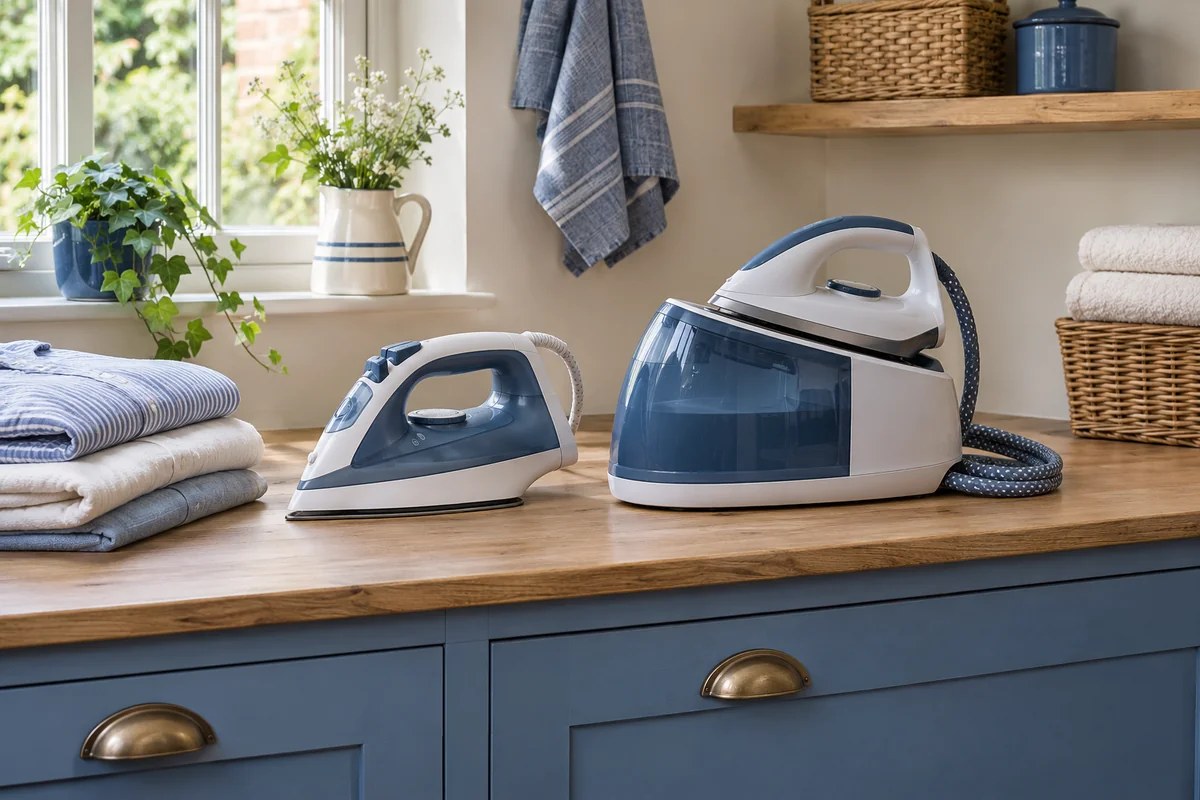
What is the difference between a steam iron and a steam generator?
A conventional steam iron has its water tank in the appliance you hold. Fill it, plug it in and move the whole unit across the board. A steam generator keeps the larger water tank in a separate base and connects it to the iron with a steam hose. The water stays on the support while you move the handpiece.
Both use a heated soleplate to press fabric. A generator gives you a different way to supply steam during that work. It can be useful for a broad cotton panel or several long items in a row. A fitted cuff, pleat or seam still needs a board shape and technique that let you reach it. The two formats have more in common with each other than either has with a handheld clothes steamer, which is designed for hanging garments.
Compare the two formats in a normal week
Scroll sideways to compare both formats.
| What to check | Steam iron | Steam generator |
|---|---|---|
| Water and refills | Smaller tank in the iron. Refill as needed using the model instructions. | Larger tank in the base. Check whether it lifts out and how it can be refilled. |
| Working space | Board, compatible iron rest or other permitted parking position, and power cord. | Board, suitable base support, and room for both hose and power cord. |
| What you move | The whole iron, including any water left in its tank. | The handpiece and part of the hose. The base stays in place. |
| Storage | Typically one compact appliance to cool and put away. | Measure the iron and base in their parked position and check cord and hose storage. |
| Typical reason to choose it | Short sessions, small cupboards or frequent setup and pack-away. | Regular longer sessions interrupted by refills, or a recurring need for sustained steam. |
Start with the last load you actually ironed. If you did two shirts and put the board away, measure the effort it took to get the equipment out. If you worked through shirts, trousers and bed linen in one go, remember how often you paused for water and which fabric took repeat passes. These details tell you more about the likely benefit than the total number of items you wash.
When a conventional steam iron is the easier choice
A single appliance is straightforward to carry from a cupboard and can suit an ironing board that shares a kitchen or spare room. If you press clothes in short sessions before work, the bigger practical improvement may be a better spot for the board or an easier temperature dial. Keep your current iron if it heats reliably, does the work you need and finishes a typical pile without inconvenient refills.
The Russell Hobbs Powersteam Ultra 20630 shows what a conventional iron can offer. Its integrated tank holds 350 ml, and the iron has a manual temperature dial and variable steam control. Water moves with the iron as you work. The tapered tip can reach around fastenings, while the controls let you match the setting to the garment and the manufacturer’s instructions.
Russell Hobbs Powersteam Ultra 20630
A 350 ml tank, ceramic soleplate and adjustable temperature and steam controls suit a mixed weekly basket. Russell Hobbs lists a 210 g steam burst.
Good for
Regular batches when you want a conventional iron with a larger tank and accessible controls.
Bear in mind
The tank is part of the handpiece, so filling it adds weight. Steam needs an appropriate temperature setting and the self-clean routine still needs doing.
- 350 ml
- 3100 W
- Up to 70 g/min stated continuous
- 210 g stated burst
For a replacement, compare integrated tank capacity with empty weight, cord length and the layout of the controls. A large tank can reduce stops, though the extra water adds to the weight in your hand. See the steam iron buying guide for more conventional models with different control and maintenance arrangements.
When a steam generator earns its space
A generator is easier to justify when your usual ironing pile includes several items that benefit from steady steam and you regularly refill halfway through. A larger tank also helps if your board is set up away from the sink. For an occasional large load, weigh that convenience against the space the base occupies every week.
The Philips PerfectCare Compact GC7842/46 has a 1.5 L base tank, rated continuous steam up to 120 g/min and a 1.6 m hose. Its temperature system does not require a manual dial for ironable fabrics. The manufacturer lists the handpiece at 1.2 kg and the iron and base together at 2.95 kg. The stationary unit still needs a suitable support when filled.
Philips PerfectCare Compact GC7842/46
The base is 19.3 cm wide, with a 1.5 L tank and automatic temperature for ironable fabrics.
Good for
Good for regular ironing when cupboard width is tight and you can take a jug to the base for refills.
Bear in mind
The tank stays in the base. Check the 1.2 kg handpiece and allow room for the base and hose.
- 1.5 L, fixed
- 120 g/min
- 400 g
- 19.3 × 37.3 × 22.3 cm
The Philips tank has a little over four times the nominal capacity of the 350 ml Russell Hobbs tank. That comparison tells you how much water fits. How long it lasts depends on the steam setting and how long you hold the trigger. The Philips model can be refilled during use as described in its instructions. Other models may have a different tank or refill procedure. Compare these details in the steam generator buying guide.
Read the steam figures in the right order
Continuous steam is the useful starting point if you use steam through much of each garment. Compare published rates in grams per minute for the exact models, then check how steam is delivered. Some controls supply steam while held. Others offer a variable setting or an automatic mode. Rated figures are manufacturer specifications. Actual output and time to finish a garment depend on the settings, fabric and way you work.
Steam boost is an extra burst for a stubborn area, such as an ironable trouser hem. Its number describes a different measure from the continuous rate. Pressure, when stated in bar for a generator, is another separate specification. The Philips leaflet gives a maximum pump pressure. Use the continuous rating and practical controls to compare routine ironing. Read the boost and pressure figures alongside them if those details matter to you.
Before paying for more steam, check the garment care symbols. Follow any written restrictions on steam, heat, prints and trims. An automatic temperature system only helps within the kinds of fabric and use its maker permits.
Check the complete setup before buying a generator
Open your current board at your normal height. Identify where the base would go, then check the manufacturer's instructions for approved support. If you need a dedicated holder, confirm its shape and dimensions, where the feet will sit and whether it can carry the filled base. The generator board guide explains how to match the two. An adjacent surface is only an option if the appliance instructions allow it and the surface meets their requirements.
Trace the hose from the proposed base position to the far end of the board. You should have comfortable movement without pulling on the base or snagging the hose on the rest. Then check the cord route to the socket and measure where the unit will go after cooling. Include the handle and parked iron in the storage dimensions. If you have to carry the base up stairs or pull it out from behind other appliances, think through that movement before committing to a larger setup.
Finally, look at maintenance. A reminder and cleaning container suit some routines, while other models use a collector or a self-cleaning cycle. Read the manual for the water type and cleaning method before using a different water supply or a descaler. If poor steam or deposits are the main problem with your current iron, check the care and troubleshooting guides first.
Manufacturer specifications and instructions
Frequently asked questions
Is a steam generator better than a steam iron?
It can be a better fit for long ironing sessions where you need a larger tank and sustained steam. For a few garments at a time, a steam iron is usually simpler to carry and set up. If your current iron finishes the usual pile on one fill, a generator may solve a problem you rarely have.
Can I use a steam generator with a normal ironing board?
Use only a setup permitted by both manufacturers. If the base will sit on the board, check for explicit generator support, a suitable platform shape and dimensions, secure contact at the feet and sufficient load capacity for the filled unit. A conventional iron rest alone gives you no assurance of fit.
Does a steam generator iron heat up faster?
Warm-up time depends on the model. Compare the stated ready time where both makers publish one, and include the time needed to get the board, appliance and water ready. A short advertised heat-up does little for a routine where setup takes most of the time.
Are steam generator irons lighter to use?
Some handpieces are lighter because the water sits in the base. Check the handpiece weight, hose movement and the total weight you will need to carry. For the Philips GC7842/46, the maker lists 1.2 kg for the iron and 2.95 kg for the iron and base together.
Can I use the same water in both types of iron?
Follow each model’s manual. Tap water is suitable for some models, but makers give different advice for hard water. The same applies to descaling. A separate-base model may use a cleaning container or removable collector, while a conventional iron may have a self-cleaning cycle.
Is a steam generator worth it for shirts?
For a few work shirts, start with how well your current iron handles the fabric and whether you can finish without refilling. For a regular pile of shirts with trousers or bedding added, a larger tank and sustained steam may save interruptions if you can set up the generator easily.